|
Measurement Bandwidth
|
140 kHz, 70 kHz, 35 kHz, 15 kHz, 10 kHz, 5 kHz, 1 kHz, 500 Hz, 100 Hz, 50 Hz, 10 Hz
|
|
S21 Noise Floor (Dynamic Range)
|
Frequency Range: 0.3–2,000 MHz Typical: -80 dB Maximum: -66 dB Frequency Range: 2,000–6,000 MHz Typical: -70 dB Maximum: -50 dB Test Condition: Measured after S11 and S21 calibration with 0 dBm level and ports terminated in 50 Ω.
|
|
Temperature Stability
|
Frequency Range: Below 4 GHz Temperature Coefficient: 0.03 dB/°C Frequency Range: 4–6 GHz Temperature Coefficient: 0.05 dB/°C Test Condition: Measured after S11 calibration with test port shorted, without calibration restore.
|
|
Trace Noise (dB RMS)
|
Bandwidth: 10 kHz Typical: 0.002 dB RMS Maximum: 0.004 dB RMS Bandwidth: 70 kHz Typical: 0.004 dB RMS Maximum: 0.006 dB RMS Bandwidth: 140 kHz Typical: 0.008 dB RMS Maximum: 0.012 dB RMS Test Condition: Measured using a 201-point sweep from 0.3 MHz to 6 GHz with test power set to 0 dBm.
|
|
Transmission Uncertainty
|
Frequency: < 2 MHz Power Range: -20 dBm to +3 dBm Magnitude Uncertainty: 1.0 dB Phase Uncertainty: 8° Frequency: ≥ 2 MHz to 6 GHz Power Range: -20 dBm to +3 dBm Magnitude Uncertainty: 0.6 dB Phase Uncertainty: 6° Frequency: < 2 MHz Power Range: -40 dBm to -20 dBm Magnitude Uncertainty: 1.2 dB Phase Uncertainty: 10° Frequency: ≥ 2 MHz to 6 GHz Power Range: -40 dBm to -20 dBm Magnitude Uncertainty: 1.8 dB Phase Uncertainty: 14°
|
|
Load Match (Port 2)
|
< -26 dB (typical)
|
|
Source Match (Port 1, f ≤ 6 GHz)
|
45 dB (typical), 30 dB (minimum) Condition: Corrected
|
|
Directivity
|
47 dB (typical), 36 dB (minimum) Condition: Corrected
|
|
Crosstalk
|
Frequency Range: 0.3 MHz–2 GHz Typical: -80 dB Maximum: -60 dB Frequency Range: 2–6 GHz Typical: -70 dB Maximum: -50 dB Test Condition: Corrected and measured with both calibrated ports terminated in short circuits after isolation calibration over the specified band.
|
|
Maximum Input Level
|
+23 dBm No damage
|
|
Compression Point
|
0.1 dB compression at 0 dBm (typical)
|
|
Test Port Connectors
|
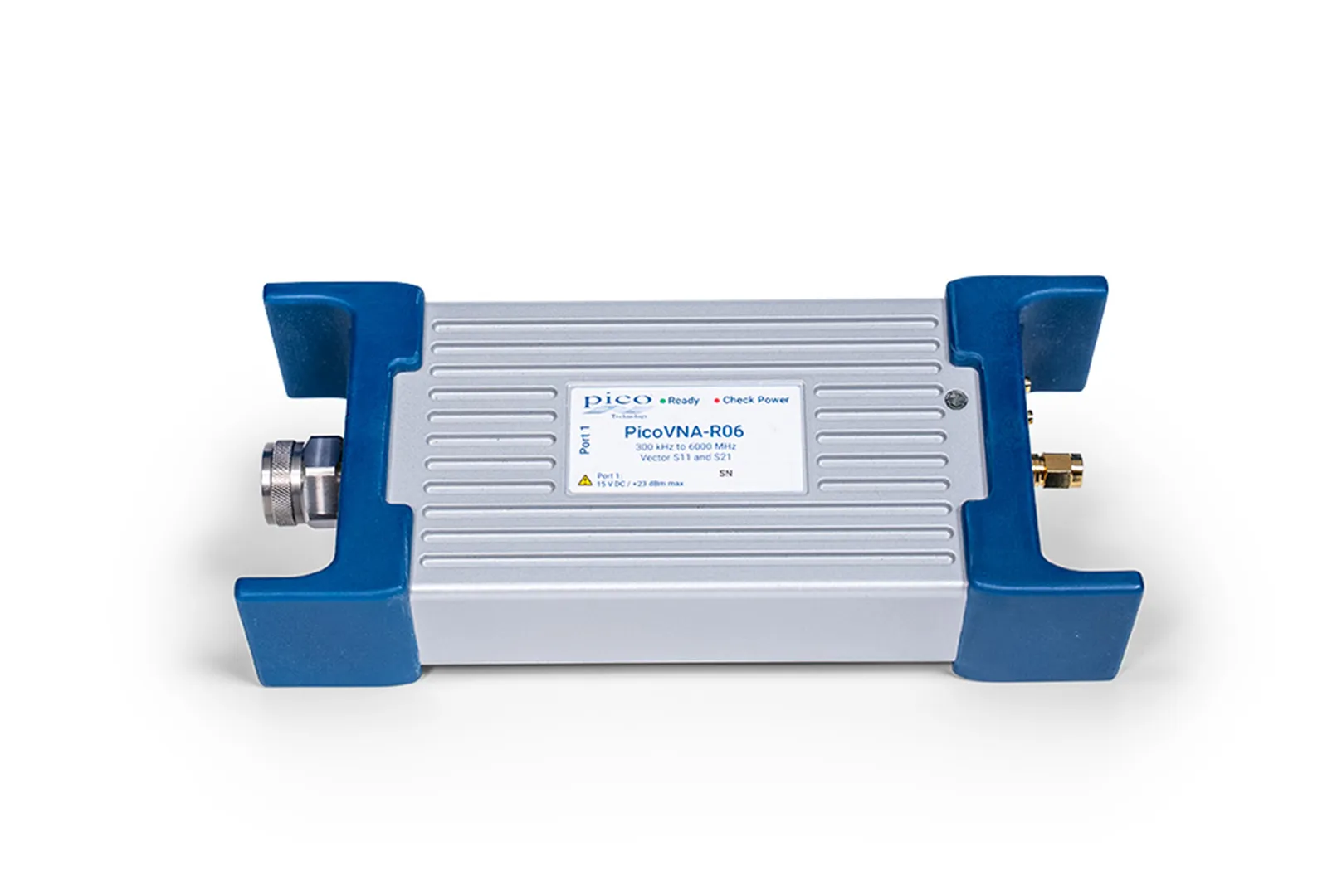
Port 1: Type N male – front Port 2: SMA male – rear
|
|
Sweep Trigger Output Voltage
|
Low: 0 V to 0.8 V High: 2.2 V to 3.6 V
|
|
Sweep Trigger Input Voltage
|
Low: -0.1 V to 1 V High: 2.0 V to 4 V
|
|
Sweep Trigger Input Protection
|
±6 V No damage
|
|
Sweep Trigger In/Out Connectors
|
SMB, female – rear panel (The rear panel includes two SMB connectors, REF/TRIG OUT and REF/TRIG IN, each shared between the 10 MHz reference and sweep trigger functions).
|
|
Measuring Parameters
|
S11, S21
|
|
Error Correction
|
S11 (1-port correction); S21 (source match correction, normalise, isolation); averaging; smoothing; Hanning and Kaiser-Bessel filtering for time-domain measurements; manual and automatic electrical length compensation; effective dielectric constant correction.
|
|
Display Channels
|
4 channels
|
|
Traces
|
2 traces per display channel
|
|
Display Formats
|
Amplitude (logarithmic and linear), Phase, Group Delay, VSWR, Real, Imaginary, Smith Chart, Polar, Time Domain
|
|
Memory Trace
|
1 memory trace per display channel
|
|
Limit Lines
|
6 segments per channel, with overlap allowed
|
|
Markers
|
8 markers
|
|
Marker Functions
|
Normal, Δ (Delta) Marker, Fixed Marker, Peak/Min Hold, 3 dB and 6 dB bandwidth
|
|
Sweep Type
|
Linear sweep, CW sweep (timed sweep)
|
|
Sweep Time, 201 Points (S11)
|
20.2 ms (140 kHz bandwidth, 10 MHz to 6.4 GHz sweep)
|
|
Sweep Time, 201 Points (S11 + S21)
|
33.1 ms (140 kHz bandwidth, 10 MHz to 6.4 GHz sweep)
|
|
Number of Sweep Points
|
51, 101, 201, 401, 801, 1024, 2001, 4001, 9001, 10001
|
|
Frequency Range
|
300 kHz to 6.4 GHz (6 GHz specified, usable to 6.4 GHz)
|
|
Frequency Setting Resolution
|
10 Hz
|
|
Frequency Accuracy
|
10 ppm (maximum) (Ambient temperature of 23 ±3 °C)
|
|
Frequency Temperature Stability
|
±0.5 ppm/°C (maximum) (+15 °C to +35 °C)
|
|
Harmonics
|
-20 dBc (maximum) (Test power set to < -3 dBm)
|
|
Non-Harmonic Spurious
|
-40 dBc (typical)
|
|
Phase Noise (10 kHz Offset)
|
-57 dBc/Hz (typical) (Frequency Range: > 4 GHz)
|
|
Test Signal Power
|
-20 to 0 dBm
|
|
Power Setting Resolution
|
0.1 dB
|
|
Power Setting Accuracy
|
±1.5 dB
|
|
Reference Input Frequency
|
10 MHz ±6 ppm
|
|
Reference Input Level
|
0 ±3 dBm
|
|
Reference Output Level
|
0 ±3 dBm
|
|
Controller PC Data Interface
|
USB-C®
|
|
Support for Third-Party Test Software
|
Standalone API with examples in C, C++, and Python; SCPI remote interface via PicoVNA 5
|
|
External Dimensions
|
187 × 81 × 41 mm (L × W × H) (Excluding connectors)
|
|
Weight
|
0.47 kg
|
|
Operating Temperature Range
|
0 °C to +40 °C
|
|
Storage Temperature Range
|
-20 °C to +50 °C
|
|
Humidity
|
80% maximum, non-condensing
|
|
Vibration (Storage)
|
0.5 G, 5 Hz to 300 Hz
|
|
Power Source and Current
|
USB-C powered, 5 V at 3 A (15 W) ; Additional: Optional DC input for hosts that cannot supply USB-C power; DC Input: +12 VDC to +15 VDC, 0.7 A continuous, 1.9 A inrush
|
|
Power Source Connector
|
5.5 mm diameter hole, 2.1 mm centre contact pin; Polarity: Centre pin positive
|
|
Host OS Requirements
|
Linux, Windows® 10 or later, macOS 11 (Big Sur) or later, Raspberry Pi OS, Raspberry Pi 4 or later
|
|
RAM
|
2 GB or more
|
|
Screen Resolution
|
1680 × 1050 or higher
|
|
GPU
|
High-performance graphics card recommended for larger sweep sizes (>1001 points)
|
|
Warranty
|
3 years
|
|
Compliance
|
EN IEC 61326-1:2021; EN 55011 Group 1 Class A; EN 61000-3-2:2019; EN 61000-3-3:2013 +A1:2019; EN 61000-4-2, -4-3, -4-4, -4-5, -4-6, -4-8, and -4-11; FCC 47 CFR Part 15 Subpart B Class A; ICES-003 Issue 7 Class A
|



.png)